2026 — now · LIVE · Sole engineer
SupaTags
A storefront that also runs the warehouse.
Delivered under Rumination Labs
- < 2 MONTHSEMPTY REPO TO TAKING REAL MONEY
- 26,400LINES OF TYPESCRIPT, ONE AUTHOR
- ON-DEVICEPHOTO CUTOUT, ZERO PER-IMAGE COST
- IDEMPOTENTWEBHOOK-DRIVEN ORDER STATE
The problem
A UK school name-label brand needed two things that are usually two products and three vendors: a shop where a parent designs a sheet of labels in under a minute, and the fulfilment operation that turns that order into a booked Royal Mail parcel. Between them sits the part nobody demos — money that has already moved, and a warehouse that has to agree with the ledger.
Photo cutout, on the customer’s device
Parents upload photos of their children. Rather than ship those images to a server for background removal, the cutout runs in the browser: ONNX inference over WASM or WebGPU inside a dedicated Web Worker, with a custom alpha-matte refinement pass to clean the edges, a main-thread fallback for older browsers, and a kill switch. Two consequences, both of which mattered to the client — per-image processing costs nothing at any volume, and no picture of a child leaves the browser to be processed.
Money that cannot go missing
Payment is Stripe hosted Checkout over a two-phase order. The order is written `pending_payment` before the redirect and promoted to `paid` only by a raw-body, signature-verified webhook. Idempotency is enforced by conditional update rather than an event ledger, so a replayed webhook is a no-op instead of a duplicate. A lazy reconciliation endpoint recovers the order if the webhook never arrives at all. Refunds share a single code path for full and partial amounts, with a cumulative ratchet so that webhook replays and route races collapse harmlessly — and `refunded` is kept deliberately distinct from `cancelled`, which means an abandoned unpaid checkout.
Parcels, and someone else’s account
Shipping talks to Royal Mail Pro Shipping v4: OAuth2 client-credentials with token caching, shipment creation returning inline base64 label PDFs, pre-manifest cancellation, service discovery, and end-of-day manifesting. The account is shared with another platform, so every allocation is scoped to its own container — one system cannot claim the other’s shipments.
The admin floor
Orders, staged fulfilment, label booking, manifests, refunds, product and pricing catalogue, promo codes, and a switch that closes the storefront. Guest customers track their own orders through the order UUID used as a bearer credential, with PII stripped from the response. Row-level security is the boundary rather than a convention, and production and development environments are isolated with fail-closed environment detection.
Why it matters
It is the clearest evidence I have of the thing I actually do: technical depth (idempotent distributed state, third-party logistics, on-device ML, RLS as a security boundary), product sense (a design tool a non-technical parent finishes in a minute), and ownership — designed, built and shipped alone, taking real money, in under two months.
Surfaces
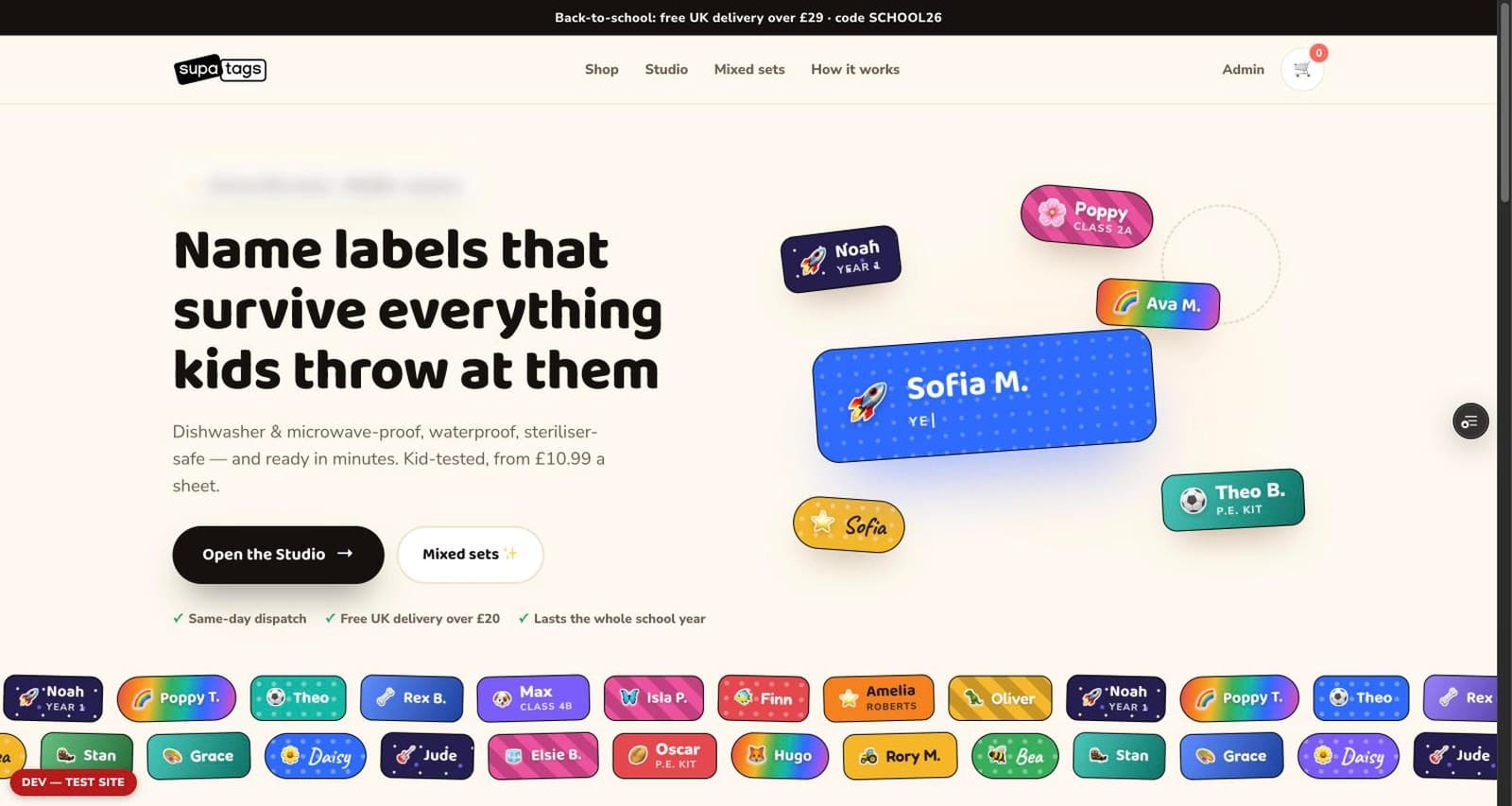
THE STOREFRONT — ONE PRICE, ONE WAY IN 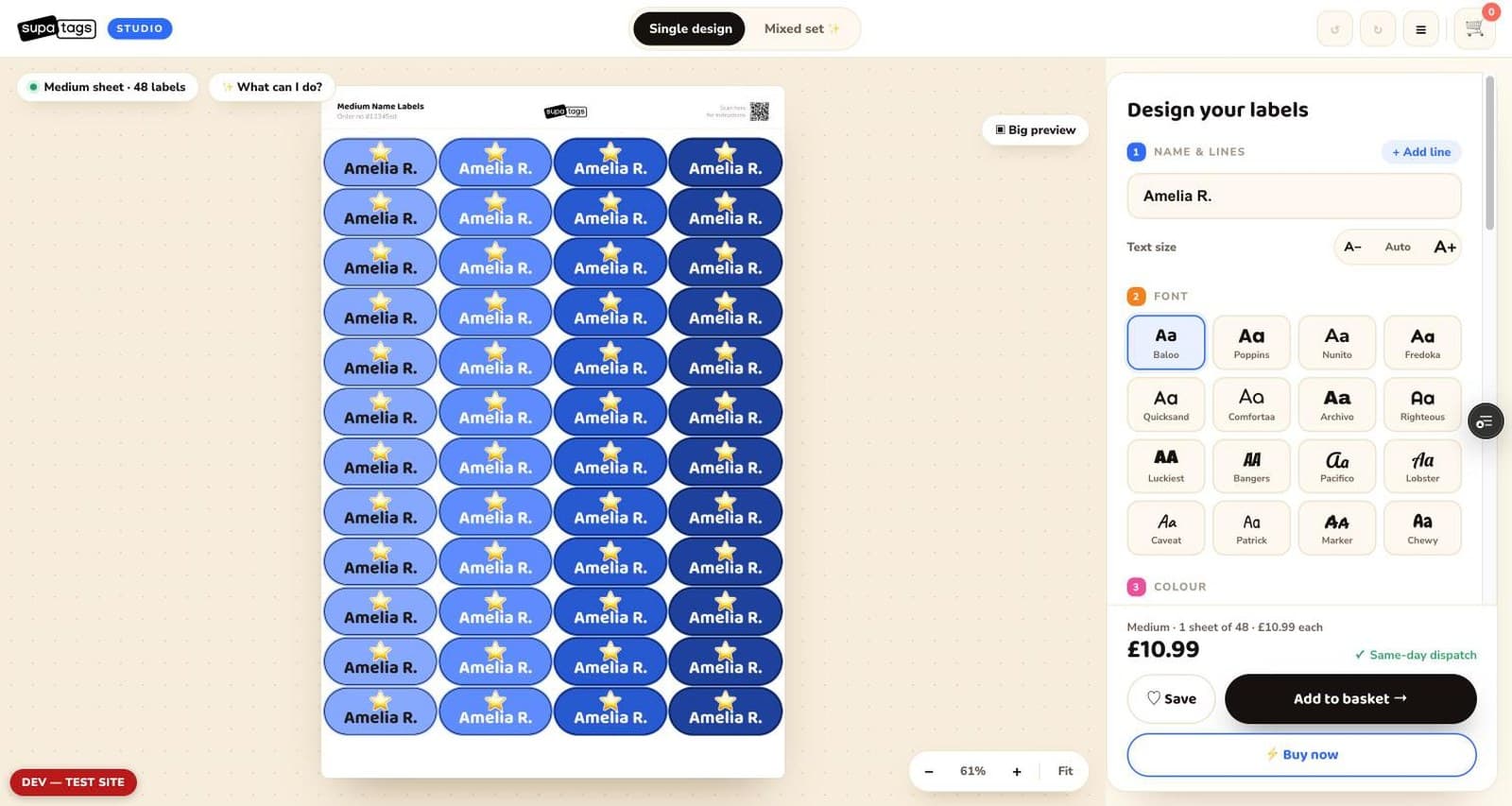
THE STUDIO — FORTY-EIGHT LABELS, LAID OUT LIVE 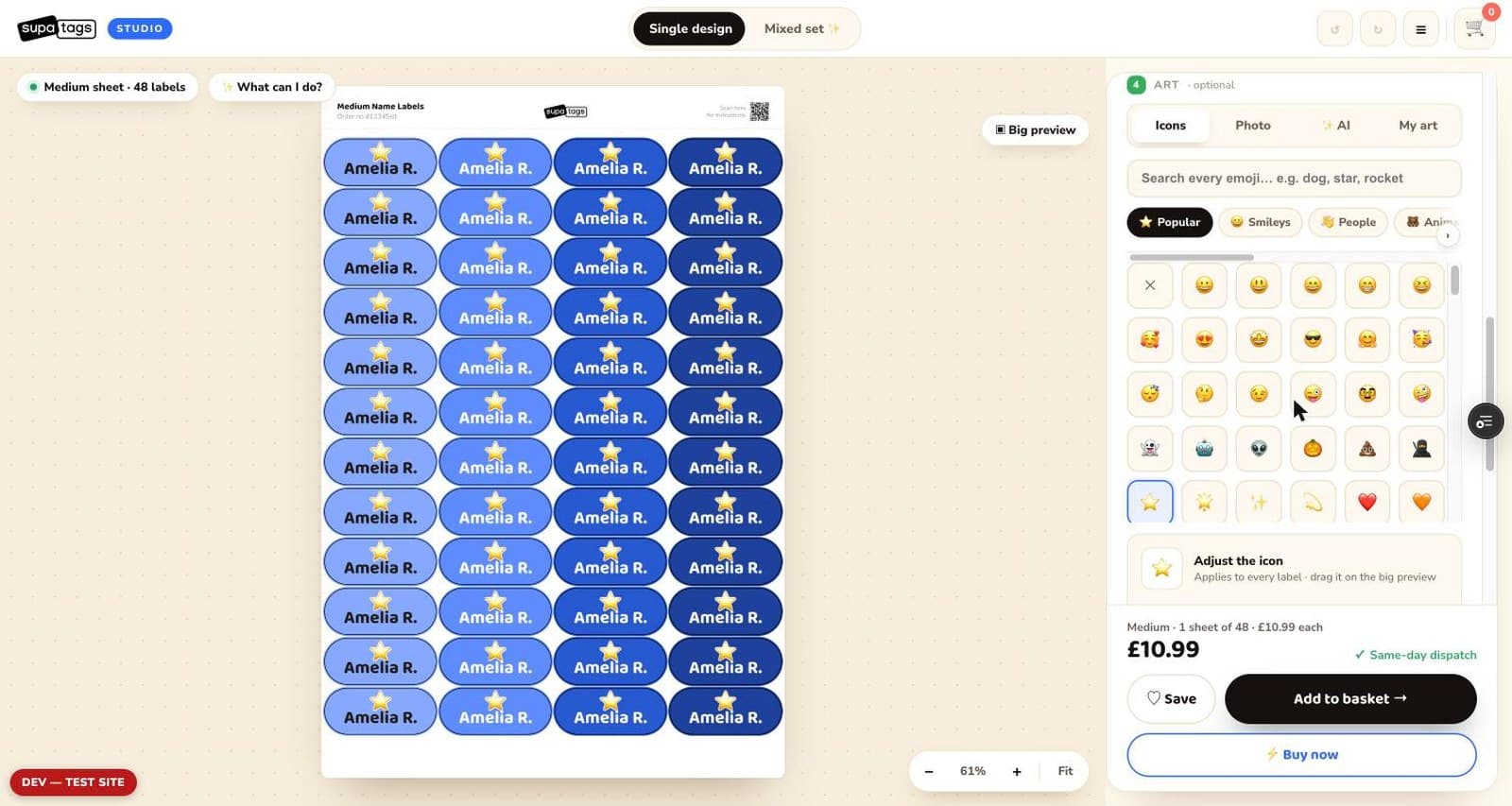
ART — FOUR SOURCES, ONE PLACEMENT 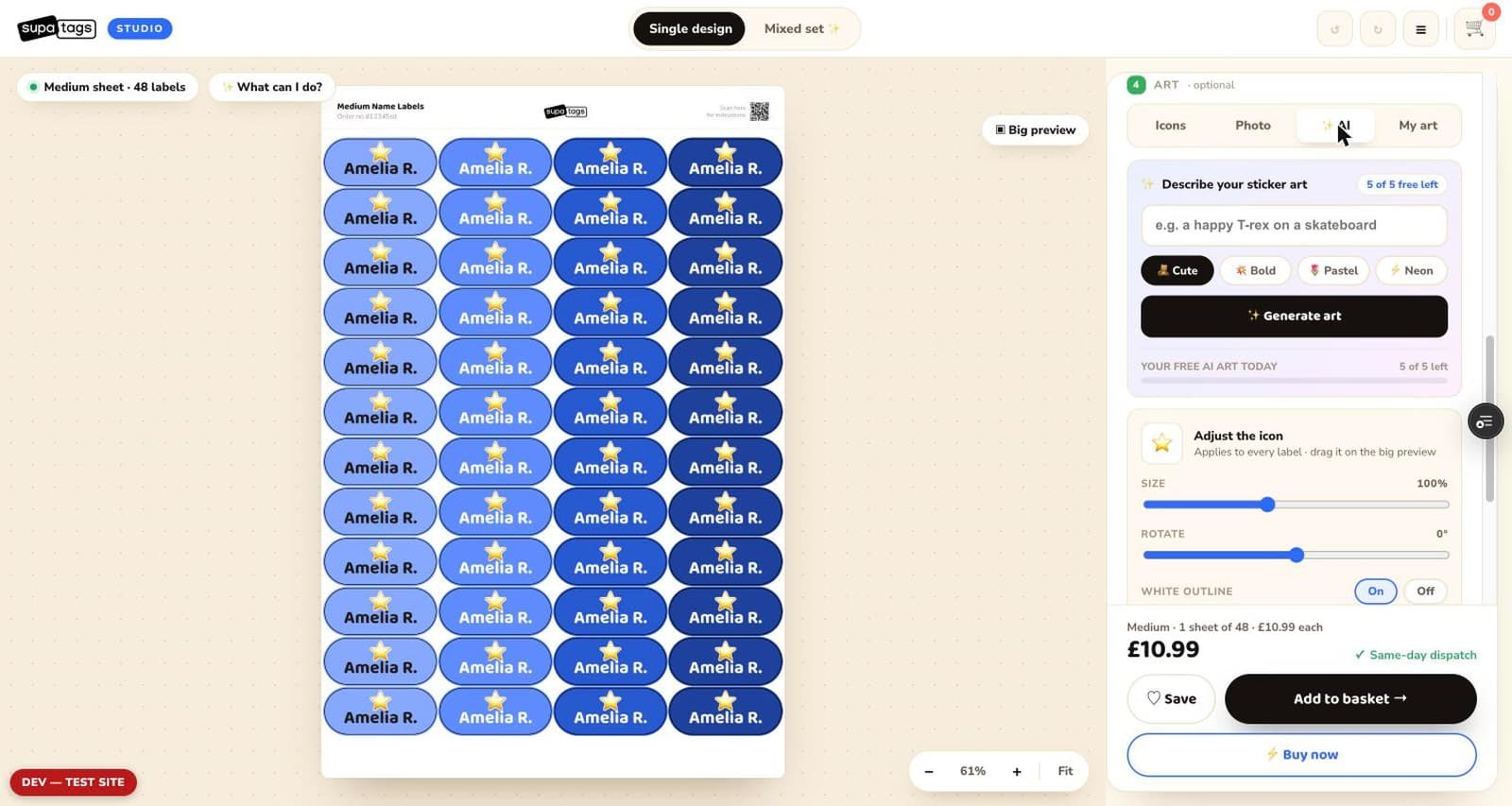
GENERATED ART — METERED, NOT UNLIMITED 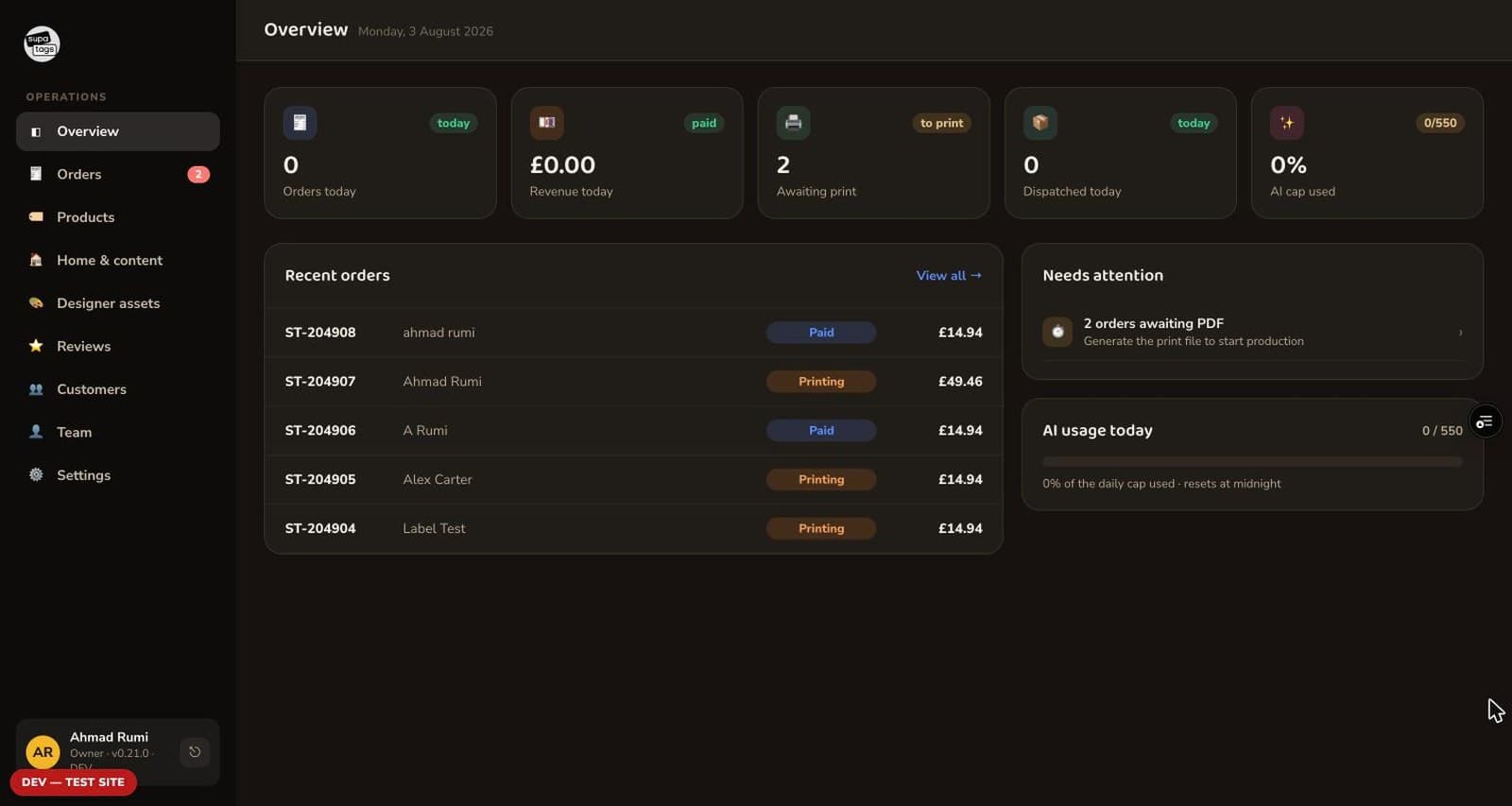
THE FLOOR — WHAT MOVED TODAY, WHAT IS STUCK 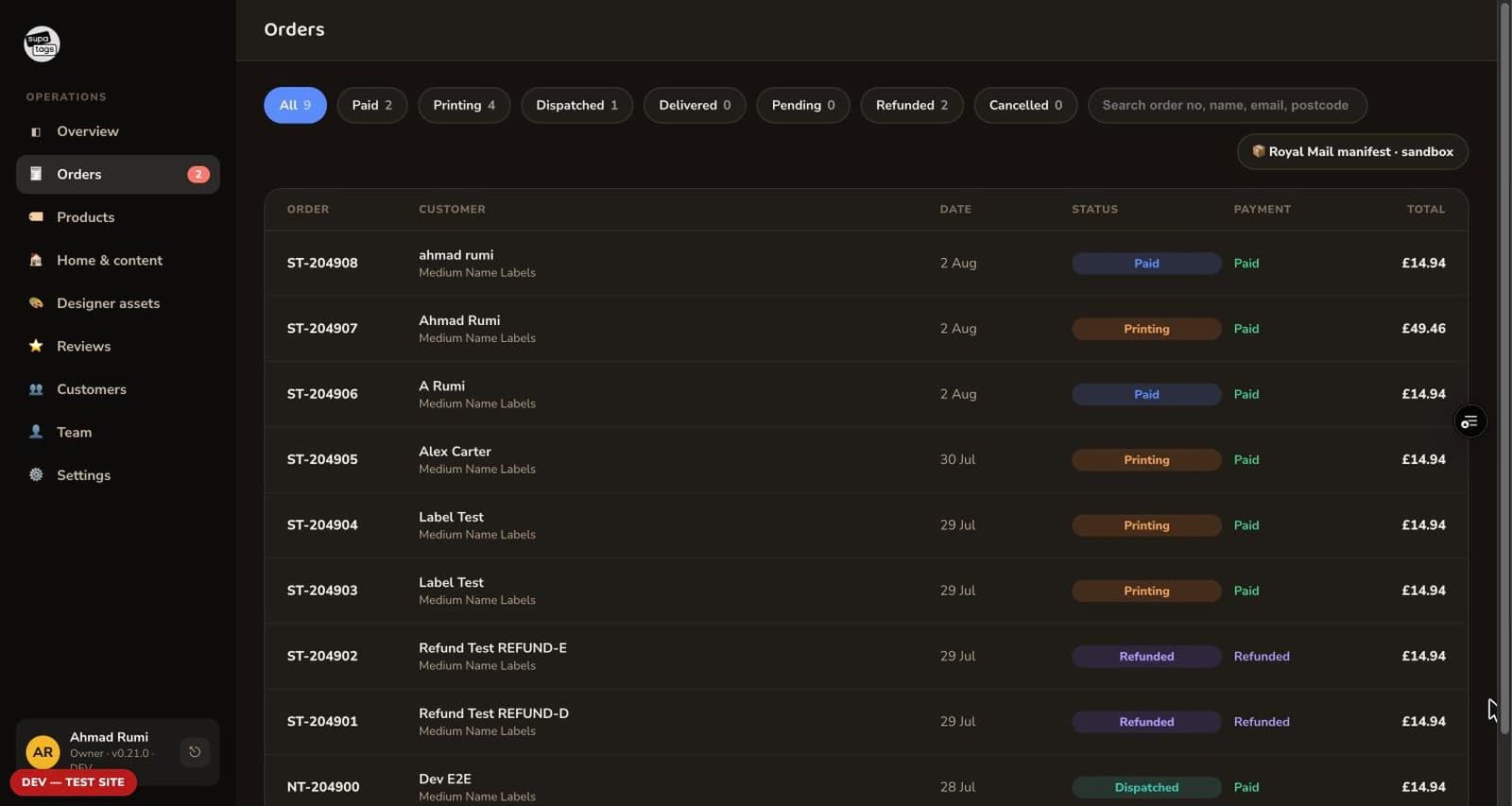
EVERY ORDER BY STATE · MANIFEST ON THE SAME SCREEN 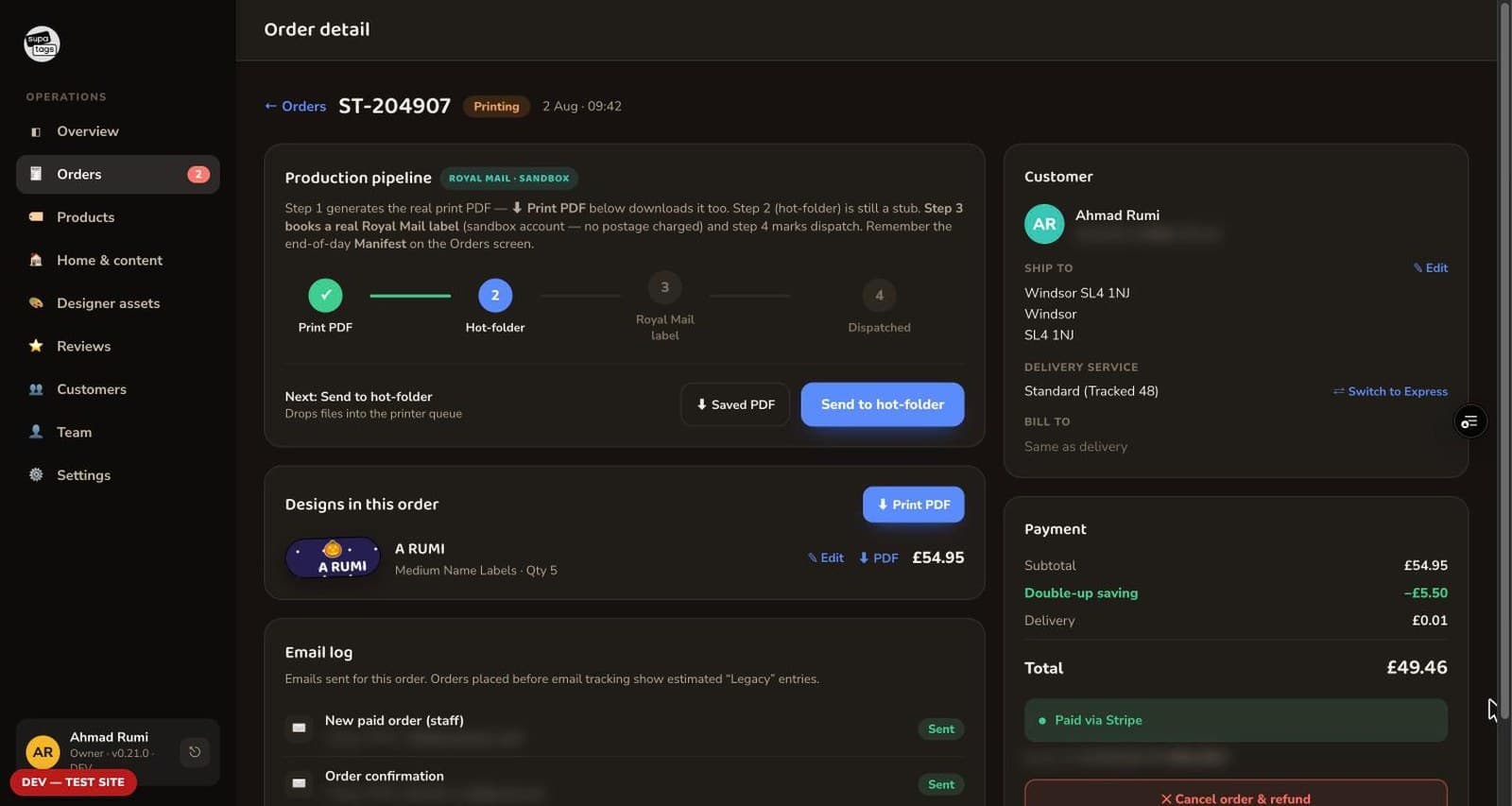
PRODUCTION — FOUR STAGES, ONE ORDER 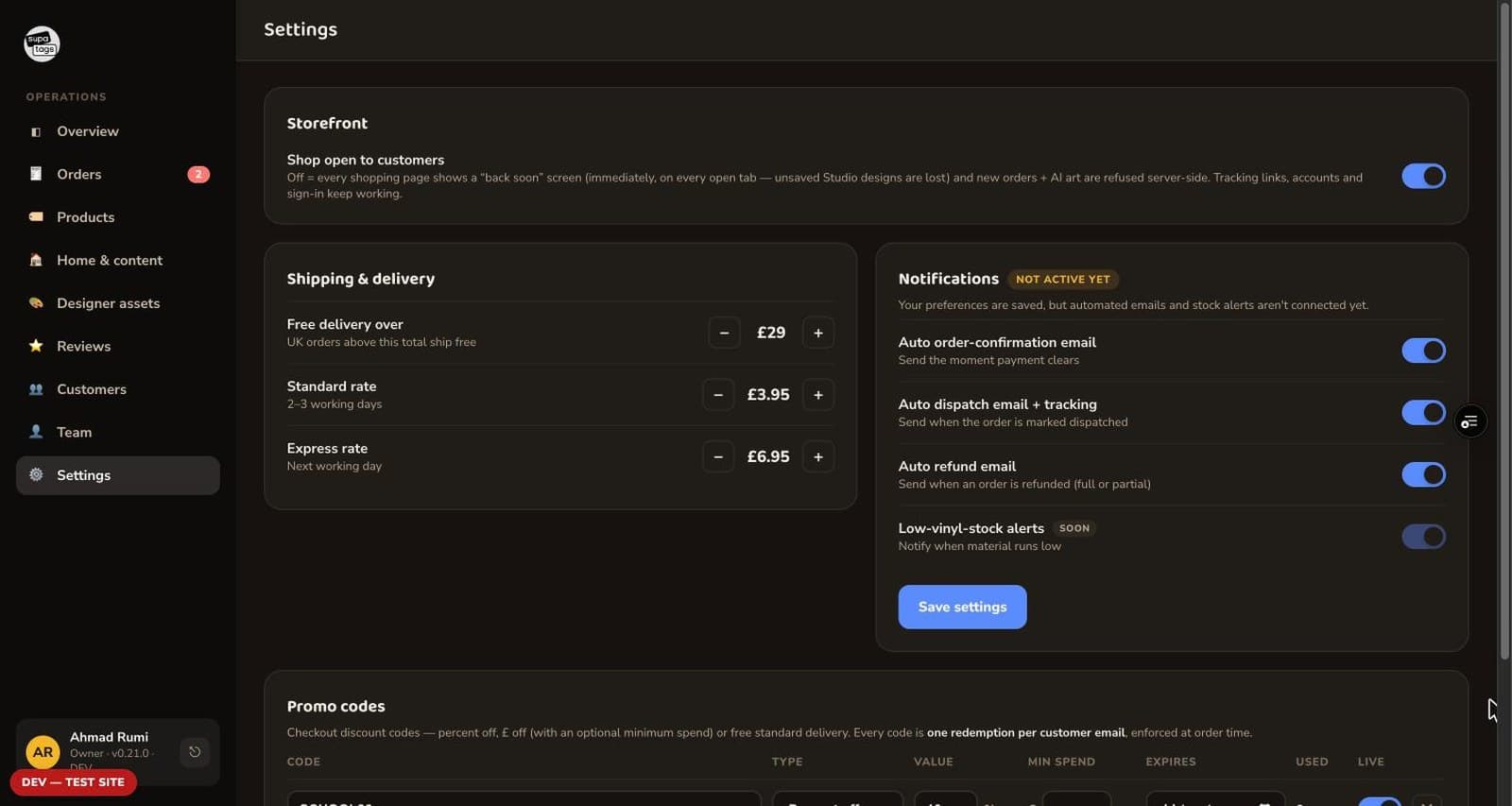
THE SWITCH THAT CLOSES THE SHOP